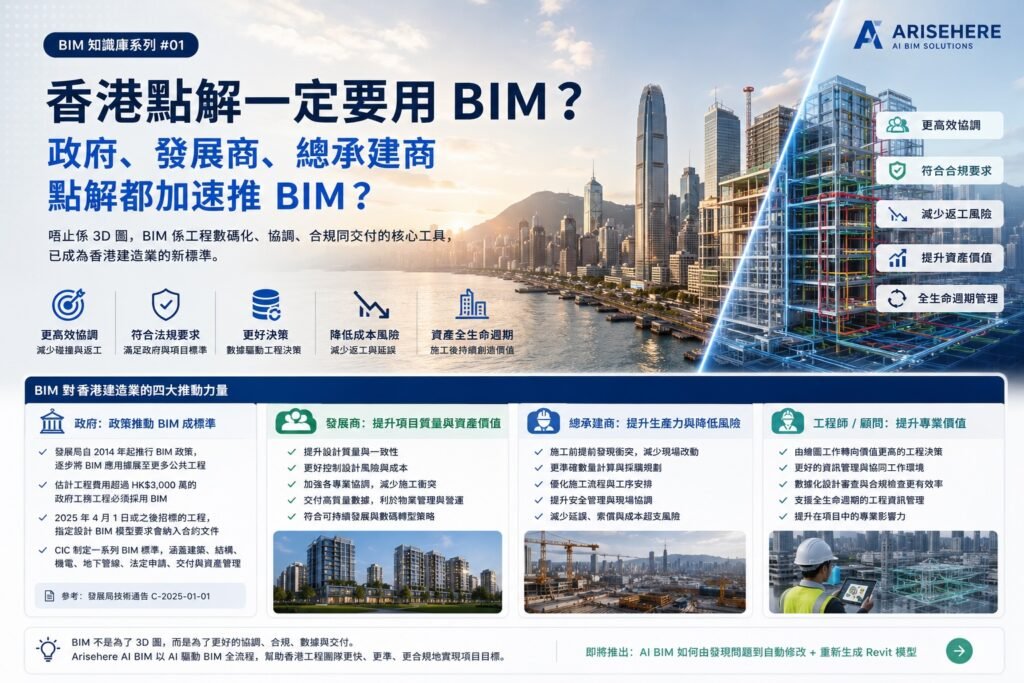
The business case for BIM is not “having a model”. It is creating a shared and reviewable information environment before site decisions become expensive to change.
BIM is not simply 3D geometry
A useful BIM workflow connects model objects with levels, systems, specifications, responsibilities, versions and deliverables. The model becomes a coordination interface only when the information is structured and maintained.
Why public-sector adoption matters
Government requirements and industry guidance encourage consistent digital delivery, coordination and asset information. Applicable requirements still depend on the project, contract, submission route and current official documents.
Why developers use BIM
Developers can turn employer requirements and technical standards into clearer model and information expectations, compare design development and retain a more traceable record across teams.
Why main contractors use BIM
The contractor’s value is earlier coordination: comparing disciplines, planning buildability and access, resolving congested areas and preparing reviewable work before installation. A clash report alone is only the start.
Why engineers and consultants remain central
Models help expose relationships and missing information, but engineering judgement, design responsibility, statutory duties and approval do not move to the software.
From BIM to AI-assisted BIM
AI can help classify requirements, screen model conditions, generate candidate layouts and repeat checks across revisions. The useful target is faster preparation and review—not unaccountable automatic approval.
Frequently asked questions
Does every Hong Kong project legally require BIM?
No. Requirements vary by client, project type, funding, contract and authority. Check the current project documents and official guidance.
Are BIM and Revit the same?
No. BIM is an information-management and collaboration approach; Revit is one software platform used in many BIM workflows.
Can AI BIM replace engineers?
No. AI can assist repetitive generation and checking, while qualified professionals remain responsible for judgement and approval.
Editorial note: This general educational article does not replace a site inspection, engineering assessment, statutory advice or a confirmed service scope. Applicable requirements and site conditions should be checked for the current project.